Ever notice how international news calls a storm one thing, but here in the Philippines, we call it something else?
Here’s the deal: The second a tropical cyclone enters the Philippine Area of Responsibility, it gets a local badge.
The Philippine Atmospheric, Geophysical and Astronomical Services Administration (PAGASA) doesn’t just pull these names out of a hat. They follow a strict, rotational system to keep things organized.
Think of the naming system like a playlist on repeat. PAGASA maintains four distinct lists of names that rotate annually.
Basically, the names we used in 2022 are the exact same ones making a comeback for 2026, 2030, and so on. Each list is stacked with 25 names, running A to Z (skipping Ñ and X).
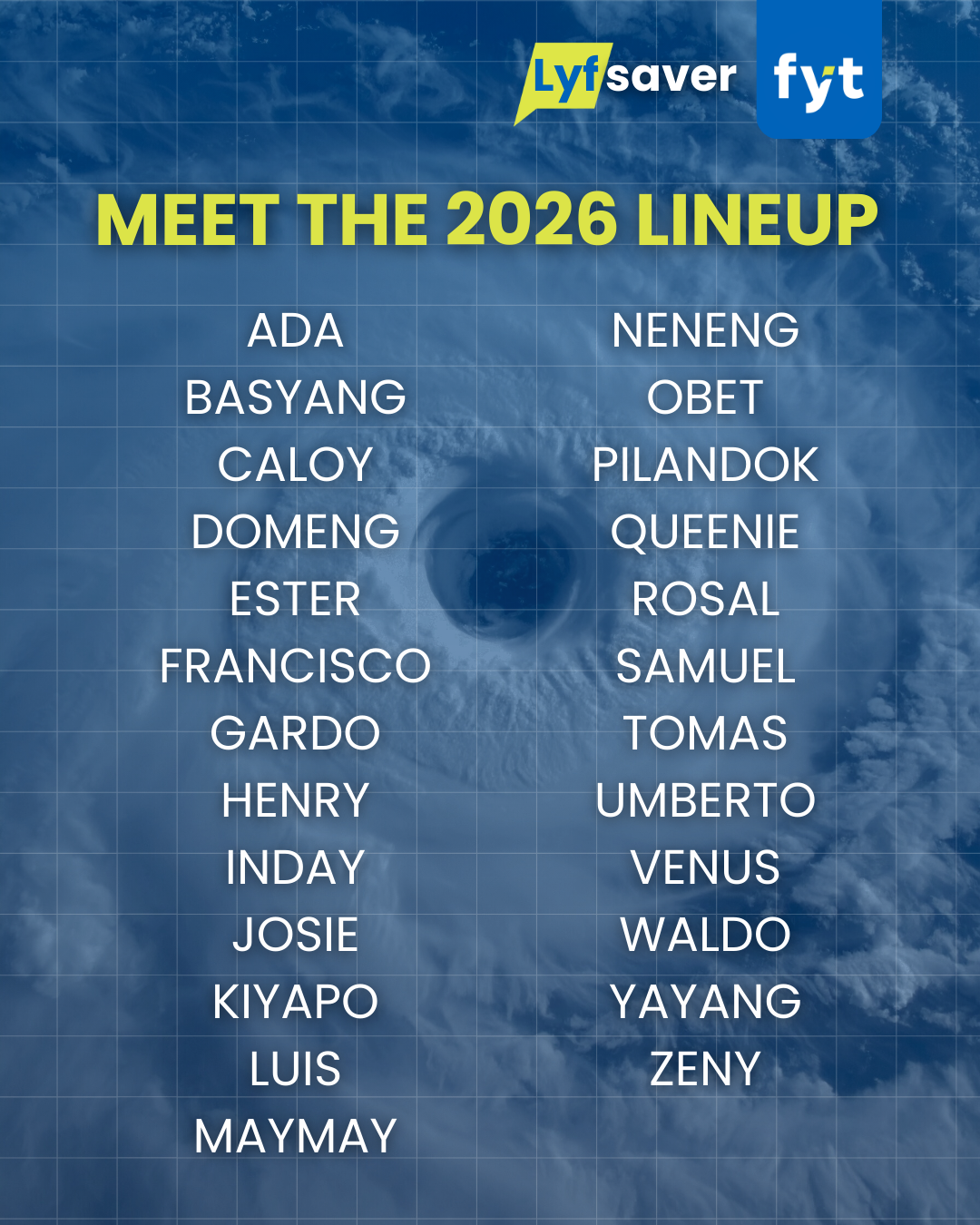
For 2026, the roster kicks off with Ada, Basyang, and Caloy, ending with Zeny. Check out the full lineup below:
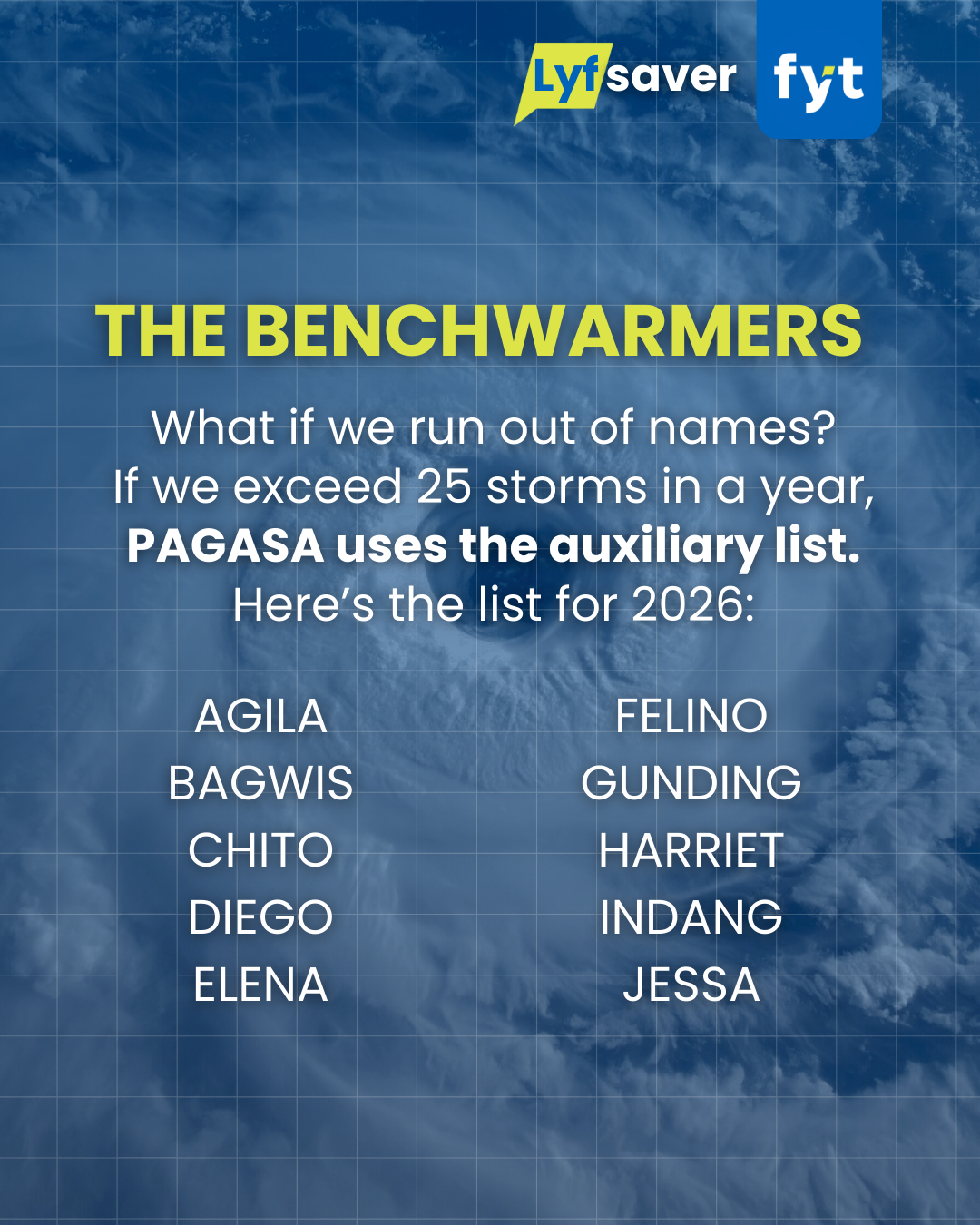
Our weather can be chaotic. If we get more than 25 storms in a year, PAGASA activates their backup or auxiliary list.
The reserve names for 2026 are as follows:
But not all names stay in rotation forever. A name is permanently retired (decommissioned) if the storm associated with it was particularly traumatic.
PAGASA drops the ban hammer if a storm causes:
This is why names like Super Typhoon Yolanda (2013), Typhoon Ondoy (2009), and Typhoon Odette (2021) have been scrubbed from the list. They are replaced by fresh names from a reserve pool to ensure we don’t reuse those already tied to bad memories.
Stay prepared for typhoons and emergencies. Save lives through LyfSaver at app.lyfsaver.ph. - fyt.ph