For many Bisaya, our accent isn’t just a way of speaking; it becomes a test in spaces that favor so-called “standard” voices.
But what if the very thing once seen as a limitation is actually an advantage?
In a world slowly learning to value authenticity, being Bisaya isn’t something to tone down, but something to own.
I grew up proud to call myself a Bisdak, short for “Bisayang Dako.”
It was more than a label, as it reflected where I came from and the culture that shaped me. It meant conversations that felt warmer, laughter that came easier, and identity deeply rooted in community.
Yet outside that space, I quickly realized that not everyone saw it the same way.
I’ve witnessed how being Bisaya became the punchline of jokes, how our accent was mocked, and how people casually reduced our identity to stereotypes like “katulong (maid).”
These labels carried quiet weight, diminishing a culture rich in diversity and resilience.
Even so, the pride never left. Behind every stereotype is a story untold: hardworking families, communities grounded in connection, and a language that carries both humor and heart.
Being Bisaya is more than an accent; it is an identity shaped by strength, adaptability, and an unwavering sense of self.
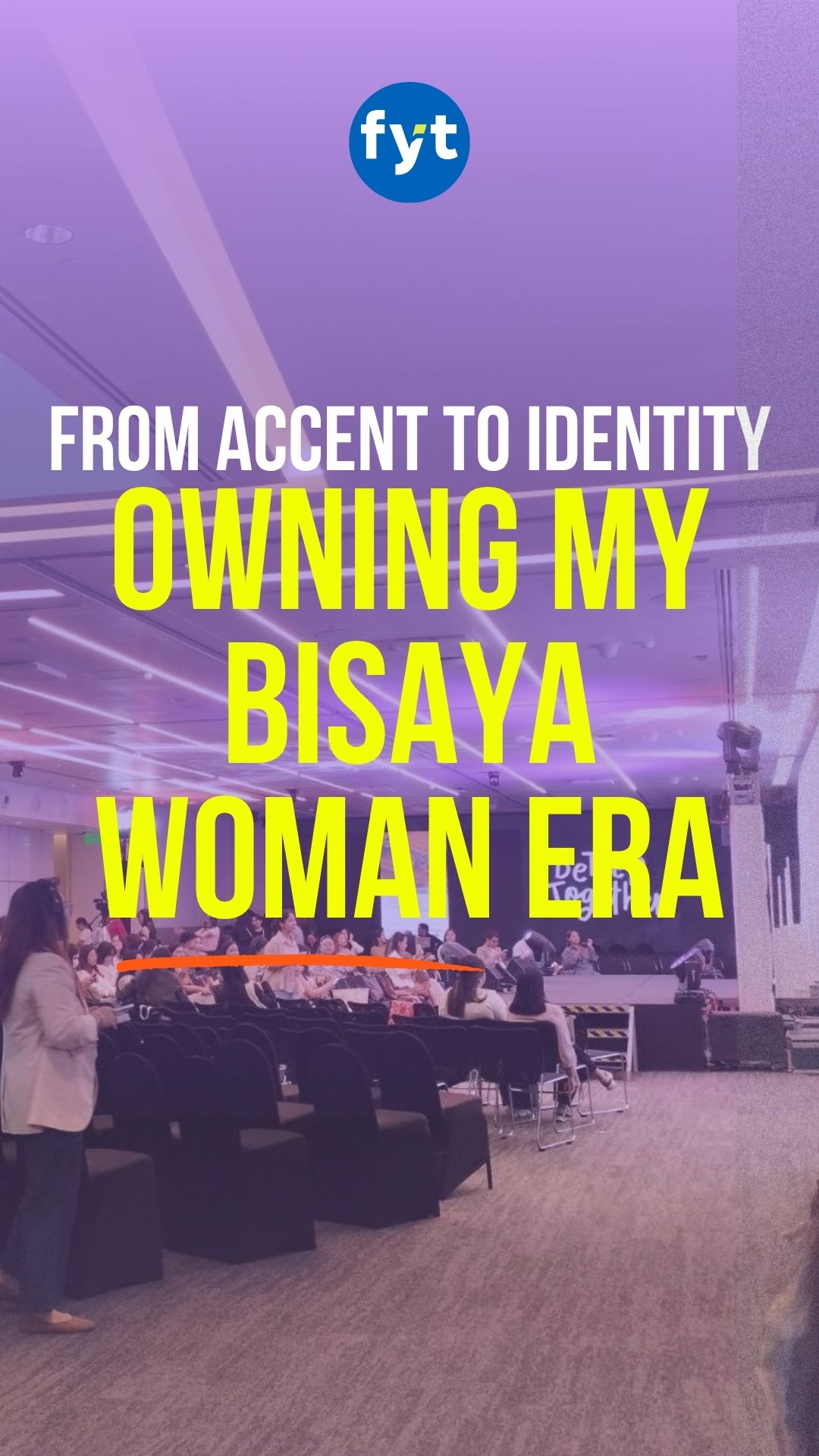
At the 10th She Talks Asia Summit 2026 on March 14, I found myself in a space where this identity was not questioned, but centered.
I attended the session titled “Embracing the Bisaya Advantage” led by comedian and TV Host Melai Cantiveros-Francisco.
For the first time, I was in a space where being Bisaya was celebrated.

Her stories balanced humor with honesty. She shared moments that revealed stereotypes.
Cantiveros-Francisco shared that, once, someone told her, “Bisaya ka, ‘no? (You’re Bisaya, right?)” After she responded yes, the person said, “Mukha ka ngang Bisaya (You do look like a Bisaya.).”
It was casual, almost harmless, but it revealed how deeply stereotypes are embedded in everyday language.
Her reflection –“Kawawa naman mga Bisaya (I pity the Bisaya)” – struck a chord in me, as it was a harsh reality check of how limited those perceptions can be.
For me, the exchange highlighted how everyday language can reinforce narrow perceptions, even when delivered without intent to harm.
Her reflections on belonging, however, offered a different perspective, one that felt closer to my own experience.
She shared: “Wala akong naramdaman noong pumunta ako ng Manila na parang na left out ako sa mga Tagalog. I feel so welcome.” (I didn’t feel like I was being left out by the Tagalogs when I came to Manila. I feel so welcome.)
Her words reflected my own experience. I moved to Manila from Cagayan de Oro, and people often asked where I was from or if I was Bisaya, something my accent often gave away.
Yet, I never felt ashamed. In fact, much like her experience, people welcomed me as I was. I did not feel left out, nor was I reduced to being “just” Bisaya. Instead, I found spaces where I was welcomed as I was.
Her story affirmed something I had quietly understood: that belonging does not always require changing who you are; it can also come from being accepted as you are.
Her response extended beyond critique. She spoke about navigating these moments with awareness, choosing growth over reaction. Over time, adaptation did not mean assimilation.
As she explained, “Nag-adjust ‘yong showbiz sa akin (Show business adjusted to me),” signaling a reversal of expectations.
Representation gains power when individuals do not conform to dominant standards but instead expand them.
When asked how she feels when the Bisaya accent is laughed at or mocked, Cantiveros-Francisco answered that she focuses on the intention behind it. If someone laughs because of a small mistake and it brings a sense of joy, that’s fine. However, if it is dismissive, it naturally sparks frustration.
Her words reshaped how I think about identity.
Confidence isn’t about responding to every microaggression; it’s about recognizing intent, learning from experience, and maintaining your space without diminishing yourself.
Identity is lived, not displayed. It exists in daily practices, relationships, and choices grounded in culture. In industries that reward conformity, this is revolutionary.
Representation alone is not enough. Visibility does not guarantee understanding. True recognition requires space, content, and audiences willing to engage beyond dominant narratives.

Founded in 2017 by Bianca Gonzalez, Iza Calzado, Lynn Pinugu, Sarah Meier, and Victoria Herrera, She Talks Asia marked its 10th summit on March 14, 2026, with the theme “Better Together.”
This year’s summit was co-chaired by wellness advocate Hannah Pangilinan and award-winning journalist and FYT Media co-founder Atom Araullo.
The summit showed me that identity is lived, not displayed. Simple routines, relationships, and cultural grounding can be revolutionary in industries that reward conformity.
Connection was intentional, not incidental. Even before sessions began, participants introduced themselves, started conversations with strangers, and eased into a shared sense of belonging.
As a Bisaya navigating spaces far from home, I’ve realized that belonging isn’t just about being accepted and about showing up.
The year’s summit co-chair, fitness content creator Hannah Pangilinan, put it simply: “The difference between a thriving community and an isolated one is just a few seconds of discomfort. You meet the space halfway, speak, participate, and stay.”
By leaning into those moments, we actively build connection and shared strength.
This idea was echoed by STA Co-founder Bianca Gonzalez-Intal, who described the beauty of community.
“When you are part of a community that sees you and understands you. If you're only at 10%, they got you; if sila ang 60% today, ako na ‘to (they’re at 60%, it’s my turn) I can cover for you. That's the beauty of community,” she said.
Listening to this, I realized that confidence grows when a community makes space for you, and the act of participating, of showing up, is what allows that space to exist.
Belonging, then, is both a choice and a gift: We contribute to the community, and the community, in turn, shapes and supports us.
Being Bisaya is rooted in community. We build connections naturally, live our relationships, and strengthen our identity every day. Belonging isn’t standing apart but finding where we fit, in our own voice.
By the end of the summit, I felt a deeper sense of ownership over my identity – not as something I need to explain or defend, but as something I can confidently carry into any space.
Because the Bisaya voice, our voice, is not something that needs to be softened. It is something that deserves to be heard, exactly as it is.